The short answer
A hand-knotted wool or silk oriental rug should not be steam cleaned where it lies. Hot water on the floor cannot rinse the whole rug, cannot test the dyes first and cannot dry the back fast enough. That can mean color bleeding, brown stains, shrinking, a damaged wood floor and a wet pad. The safe way is to take the rug out, test it, wash it by hand and dry it under control.
If you searched for oriental rug cleaning NYC because a crew offered to “do the rug while we’re here,” read this first. Wall-to-wall carpet is built to be cleaned in place. A hand-knotted rug is not. It is a woven textile with a cotton or wool foundation, natural fibers on top and, in many older pieces, dyes that were never made to meet hot water on a hardwood floor.
We see this question in apartments and houses across the city and the suburbs. This fall, for example, we picked up area rugs for plant cleaning from homes in Harlem, Rye and Wantagh and brought them back clean in October. None of them were cleaned on the floor. Our green rug cleaning in NYC keeps that same rule for every hand-knotted piece we handle, with non-toxic, eco-safe products and a price confirmed with you before any work begins.
Dyes can run
Some colors bleed into the next color when they get hot and wet.
Water sinks
Water runs through the rug into the pad and onto the floor.
Slow drying
A thick rug lying flat can stay damp underneath for a long time.
Soil stays in
Grit deep in the knots needs a full rinse, not one pass on top.
01. A rug is not carpet
Wall-to-wall carpet is mostly synthetic fiber glued or stitched to a backing, stretched over a pad and fixed to the floor. It is made to take hot water extraction where it sits, and that is how we clean it on a carpet cleaning visit.
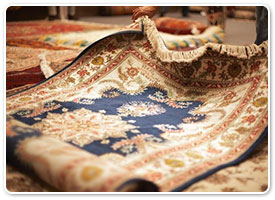
An oriental rug is built the other way around. Each knot is tied by hand around cotton or wool warp threads, packed tight with weft threads, and the pile is usually wool, sometimes silk. There is no plastic backing to stop water. What goes in the top comes out the bottom, and what comes out the bottom lands on your floor.
02. Color bleeding: the problem you cannot undo
Many oriental rugs use natural or older dyes. Some are stable. Some are not, and you cannot tell by looking. A deep red or navy that never moved for twenty years can bleed into the ivory next to it the first time it gets hot and wet. On the floor, there is no way to test each color first and no way to rinse a bleed away quickly.
At the plant, dye testing comes before any washing. If a color is weak, the method changes: cooler water, a different rinse, faster drying. That choice is the whole point of sending the rug out, and it is why our area rug cleaning always starts with an inspection.
03. Brown stains, shrinking and slow drying
The second risk shows up a day or two later. Industry guidance on what causes browning lists slow drying, over-wetting and high alkalinity, and names natural fibers such as wool and cotton. A thick rug lying flat on a pad dries slowly from the top, and as it dries the moisture pulls dissolved soil up to the tips. The result is a tan or brown haze, often worst in the light areas.
Cotton foundations can also tighten when they get soaked and dry unevenly. That can make edges ripple or a corner pull in. Fringe, which is the end of the cotton warp, is the first place you see it turn yellow or brown.
- Brown or yellow haze after drying, mostly on light colors.
- Wavy edges or a rug that no longer lies flat.
- Fringe that turns darker than before.
- A musty smell a few days later from a damp back or pad.
04. What happens to the floor and the pad
Hardwood, parquet and older pre-war oak floors do not like standing water. Water that runs through a rug sits trapped between the rug, the pad and the wood. That can leave cupping, dark marks or a white haze in the finish. The pad itself soaks up dirty water and holds it.
In a co-op or a doorman building on the Upper East Side, a water mark on the floor is a bigger problem than a dirty rug. The same goes for a parquet floor in a Riverdale apartment. Taking the rug out keeps your floor and your pad dry.
Tip: check the back of the rug
Flip one corner over. If you can see the knots clearly on the back, in the same pattern as the front, the rug is almost certainly hand-knotted. If the back is a flat glued cloth, it is machine-made or tufted, and the rules are different.
05. On the floor vs. at the plant
Here is the difference in one place, so you can decide what fits your rug.
| Step | Steam cleaned on the floor | Washed at the plant |
|---|---|---|
| Dye test | Hard to do for every color | Done before washing |
| Inspection | A quick look at the top | Fiber, knots and condition checked first |
| Rinse | Top layer only | Whole rug, front to back |
| Floor and pad | Get wet | Stay dry at home |
| Drying | Slow, lying flat | Fully dried under controlled conditions |
| Fringe | Often skipped | Cleaned and groomed separately |
06. When cleaning a rug in place is fine
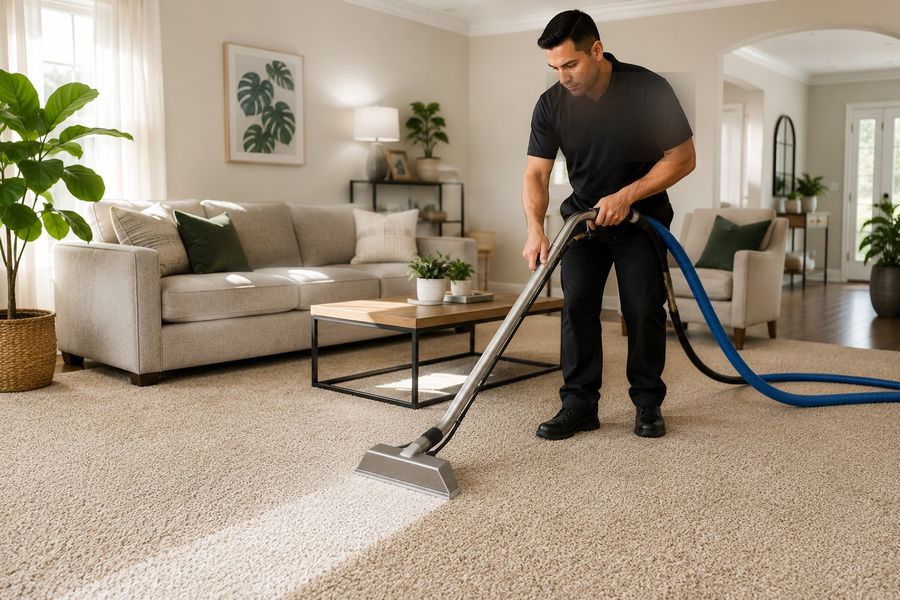
Not every rug needs to leave the house. A synthetic machine-made rug with stable colors, or a low pile rug that is part of a full carpet visit, can often be cleaned on site. The technician checks the label, the back and the colors first. If anything looks risky, the rug goes on the pickup list instead.
Sofas and chairs are cleaned in place too, with tools made for fabric. If you are booking both, our upholstery cleaning can happen on the same day the rug is picked up.
07. What to do before pickup
- Vacuum both sides. A slow pass on the front and the back loosens grit before the rug is rolled.
- Blot fresh spills. Use a white cloth and cool water. Do not scrub and do not pour on a store cleaner.
- Take photos. Note old stains, worn spots, moth damage and loose fringe so nothing is a surprise later.
- Clear the floor. Move small furniture off the rug so it can be rolled without dragging.
- Mention the building. Tell us about elevator booking, a doorman or stairs so the pickup goes smoothly.
Don’t rent a machine
Rental steam machines leave too much water in a thick wool rug.
Don’t use bleach
Bleach and strong cleaners can strip natural dyes for good.
Don’t dry it in the sun
Strong direct sun on a wet rug can fade colors unevenly.
Don’t pull fringe
Fringe is the end of the warp. Pulling it loosens the knots.
08. City apartments and suburban houses
In Manhattan apartments, rugs often sit in small rooms over old wood floors, and every drop of water counts. In Westchester houses, big dining room rugs collect road salt and boot grit through the winter. Families planning oriental rug cleaning in Rye often have large rugs that will not dry well on a floor.
On Long Island, sand and pet hair are the big ones. Across Nassau County, homeowners booking rug cleaning in Hempstead or Great Neck oriental rugs ask the same question, and the answer is the same. Out east, summer houses with East Hampton oriental rug cleaning needs usually send rugs out at the end of the season.
The rule we follow
If a rug is hand-knotted, it is washed by hand at the plant, never steam cleaned on the floor. It costs a little more time, and it protects the rug, the floor and the pad.
09. How often, and how to book
How often a rug needs a full wash depends on foot traffic, pets and where it sits. Our guide on how often to clean wool rugs goes into the details. If you are curious why we still use hot water extraction for wall-to-wall carpet, see hot water extraction vs. encapsulation.
Every job starts with a free quote, and the price is confirmed with you before any work begins. New customers get 10% off their first cleaning. Call 1-800-589-4364 or use the form below, and we reply within 30 minutes, 7 days a week.
Oriental rugs and on-floor cleaning: common questions
Can an oriental rug be steam cleaned at home?
We do not recommend it for hand-knotted wool or silk rugs. Hot water on the floor cannot test every dye, rinse the whole rug or dry the back quickly, so colors can bleed and brown stains can appear.
How do I know if my rug is hand-knotted?
Turn a corner over. If the back shows the same knots and pattern as the front, it is almost certainly hand-knotted. A flat glued cloth on the back means a machine-made or tufted rug.
Will water hurt my hardwood floor under the rug?
It can. Water that runs through a rug gets trapped between the rug, the pad and the wood, which can mark the finish or cup the boards. Taking the rug out keeps the floor dry.
Which rugs can be cleaned in place?
Many synthetic, machine-made rugs with stable colors can be cleaned on site. The technician checks the label, the back and the colors first and suggests pickup if anything looks risky.
Are your rug cleaning products safe for kids and pets?
Yes. We use non-toxic, eco-safe products that are safe for children, pets and allergy households, and the price is confirmed with you before any work begins.
Ready to get your rug washed the right way?
Get a free quote for your oriental rug and save 10% on your first cleaning.
Get your free quote →