The short answer
Those gray or black lines along the walls, under doors and on the edges of stair treads are usually filtration soiling. Air slips through the small gap between the carpet and the baseboard, and the carpet acts like a filter, catching very fine soot and dust. It is not a spill and usually not mold. It does not come out with a vacuum or a home shampoo machine, but a professional edge treatment with pre-spray, hand agitation and hot water extraction can lighten it a lot and often remove most of it.
If you looked into green steam carpet cleaning because the carpet looks fine in the middle of the room but has a dark frame around the edges, you are not imagining it. The lines are sharp, they follow the walls and the door gaps, and they come back in the same places year after year. This guide explains what they are, why they get worse in the heating season, and what really works on them.
We are Green Choice, a family-owned company in business since 2005. Our eco-safe carpet cleaning across NYC and Long Island uses non-toxic products that are safe for kids, pets and allergy households, and edge lines are one of the most common things people point at when our technician walks in.
Dark lines on your carpet?
Call now or send a quick note. We reply within 30 minutes, 7 days a week.
☎ 1-800-589-4364Air, not spills
Moving air leaves the soot behind.
Sharp edges
Lines follow walls, doors and stairs.
Hand work
Edge tools, pre-spray, extraction.
Slow it down
Seal gaps, fewer candles, vacuum edges.
01. What filtration lines look like
Filtration soiling has a clear pattern. The carpet is darker in a narrow band, usually one to three inches wide, right where it meets the baseboard. The band is often worst on outside walls and under windows. You may also see a dark bar in front of a closed bedroom door, a shadow under the radiator cover, a gray strip along the front edge of each stair, and dark spots around floor vents.
- The line has a sharp edge and runs parallel to the wall or the door.
- It is gray to black, not brown, yellow or green.
- It feels dry and is not sticky.
- It gets darker a little each winter, even in rooms where nobody walks near the wall.
That last point is the clue. A traffic lane forms where feet go. Filtration lines form where air goes.
02. Why it happens: your carpet is an air filter
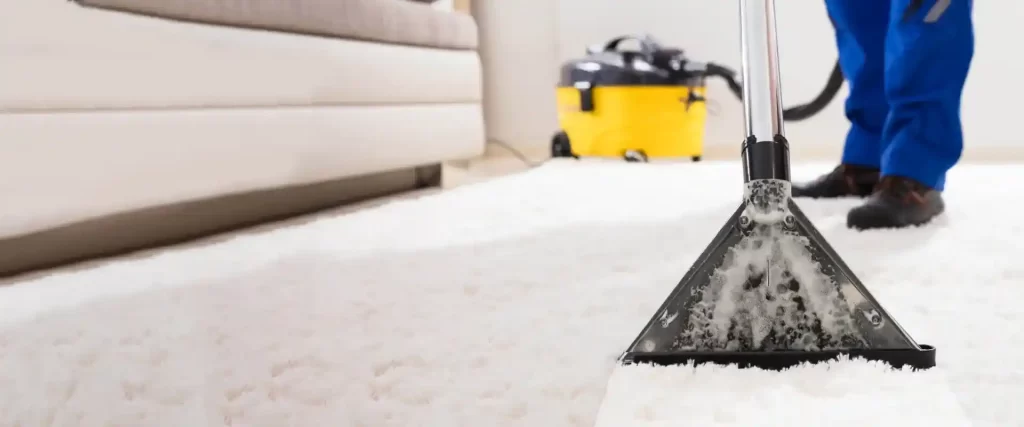
A home is never fully sealed. Wind, the difference between warm inside air and cold outside air, and heating systems all push and pull air through small cracks. One of the easiest paths is the gap under the baseboard and the space between the carpet and the subfloor. When air passes through the carpet fibers there, the fibers catch the tiny particles riding in it.
Building scientists at Building Science Corporation describe this in their digest on black stains on carpets. They explain that only very small particles do it, mostly from burning: candle smoke, tobacco smoke, fireplace smoke, and dust or lint that scorches on hot heating surfaces. They name candle smoke as a main source in many homes.
So the dark line is not dirt from shoes. It is mostly fine soot, plus a little street dust and cooking smoke, that the carpet has been quietly filtering out of the air for months.
03. Why NYC apartments get it so often
In Manhattan and the other boroughs, a few things line up. Many pre-war buildings have old windows and radiators along the outside wall, and steam heat creates strong air movement in winter. The door to the public hallway often has a gap at the bottom, and hallway air is pulled under it when a window is open or the kitchen fan runs. That is why you see a dark bar right in front of the apartment door.
City air also carries fine soot from traffic and building boilers. Add holiday candles, a gas stove and a radiator that bakes dust, and the carpet edges have plenty to catch. This November our crews cleaned wall-to-wall carpet in a Harlem apartment, and in older apartments like that the edges always get their own attention. If you live uptown, see our page on carpet cleaning in Harlem.
Up in the Bronx, the big pre-war buildings in Kingsbridge have the same radiators and hallway doors; we cover them with carpet cleaning in Kingsbridge. In Queens, the brick co-ops and garden apartments of Jackson Heights are a classic place for dark lines under bedroom doors.
04. Houses on Long Island and in Westchester
Houses get filtration lines too, just in different spots. Forced hot air systems move a lot of air, and if return vents are few, closed bedroom doors become the path back. The result is a dark strip across the doorway. Second-floor rooms over a garage or a cold porch, and rooms near a wood stove or a gas fireplace, are often the worst.
Carpeted stairs show it on the front edge of each step and along the wall side, where air rises up the stairwell. Our post on stair carpet in walk-ups and houses covers the rest of the stair problems.
In Nassau County we serve the Cape Cods and colonials around Rockville Centre, and in Westchester the older houses reached by our Scarsdale carpet cleaning crew. This month we also quoted carpeted rooms, hallways and a staircase in a Manhasset house, a typical job where the hall and stair edges matter as much as the rooms.
05. Is it soot, a spill, or mold?
Before anyone cleans, it helps to know what you are looking at. This table shows the usual signs.
| What you see | Most likely | What it means |
|---|---|---|
| Thin gray-black band along walls, doors, stair edges | Filtration soiling | Fine soot caught from moving air |
| Wide gray path through the middle of the room | Traffic soil | Shoe grit and body oils |
| Brown ring that came back after a cleaning | Wicking | Something deep in the pad rose up |
| Fuzzy green, white or black patches with a musty smell | Moisture problem | A leak or damp floor that needs fixing first |
If there is a musty smell, a soft or wet floor, or a recent leak, deal with the water source first. Our guide to hot water extraction explains why fast drying matters in any cleaning.
06. Why home scrubbing and rental machines fail
Soot particles are tiny and oily. They wedge deep between the fibers and stick to them. A vacuum cannot pull them out because they are not loose. A rental shampoo machine has a wide head that cannot get tight against the baseboard, so it cleans the inch next to the line and leaves the line itself. That can make the line look even sharper.
Hard scrubbing
A stiff brush frays the pile and spreads the soot into a wider gray smudge.
Too much soap
Leftover soap is sticky, so the edge gets dark again faster.
Bleach or oxy
They can strip color and leave a light stripe that is worse than the dark one.
Soaking the edge
Water runs under the tack strip and into the pad, where it is slow to dry.
Want the edges done right?
Tell us the rooms and where the lines are. Free quote, price confirmed before any work begins, and 10% off your first cleaning.
Call 1-800-589-4364 Get your free quote →07. How we clean filtration lines
Edge lines need a slower, more hands-on approach than the open floor. On a typical visit our technician works like this:
- Inspect and test. We check the fiber, look for loose seams at the wall, and test a hidden corner for color.
- Dry vacuum the edges with a crevice tool, so loose dust does not turn to mud.
- Pre-spray the line with an eco-safe pre-treatment made to loosen oily soil, and give it time to work.
- Agitate by hand with a small edge brush, working along the line, not across it.
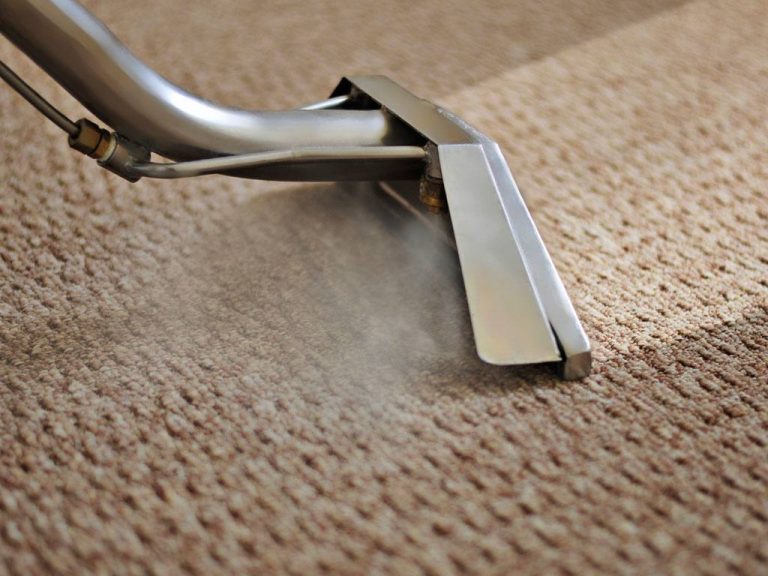
- Extract with a hand tool held tight to the baseboard, then clean the whole room with hot water extraction.
- Groom and dry. We groom the pile and set airflow so the carpet is ready to walk on in about 4-6 hours.
Tip: move things off the walls
Pull small furniture, baskets and cords a foot away from the walls before we arrive. The lines are right behind them, and the edge tools need room to work.
Honest note: most lines lighten a lot, and many disappear. Very old lines on light carpet, especially carpet that has been filtering for years, can leave a faint shadow, because some soot sits at the base of the fibers. We tell you what to expect before we start.
08. How to slow it down
Cleaning removes the lines, but the air keeps moving. A few simple habits keep them from coming back fast. None of them cost much, and most take only a few minutes:
- Burn fewer candles, or switch to flameless ones in rooms with carpet.
- Change the furnace filter on schedule and keep return vents open.
- Leave bedroom doors a little open in winter, or add a door sweep at the hallway door.
- Ask a handyman to seal the gap under baseboards on outside walls.
- Vacuum the edges with a crevice tool once a week, not just the open floor.
Do the rest of the room too
The same air carries soot into area rugs and sofas. One visit can cover area rug cleaning, upholstery cleaning and mattress cleaning, all with one free quote.
09. Where we clean carpet edges
We serve Manhattan, Brooklyn, Queens, the Bronx, Westchester County and Long Island, including Nassau, Suffolk and the Hamptons. In Brooklyn, brownstones and row houses in Park Slope often have carpeted parlor-floor rooms with drafty windows, another place lines show up. If pets are part of the picture, read our guide to pet stains and odor too, because pet spots and soot lines need different treatment.
Most areas get same-day or next-day appointments, with evening and weekend slots in most zones. Call 1-800-589-4364 or use the form below. Payment is by card or cash when the job is done.
Dark carpet edges: common questions
What are the black lines on my carpet along the walls?
They are usually filtration soiling. Air moves through the gap between the carpet and the baseboard, and the carpet fibers catch very fine soot and dust from that air, leaving a dark band.
Is filtration soiling mold?
Usually not. Filtration lines are dry, sharp and gray to black, with no musty smell. If you see fuzzy patches, smell mustiness or know of a leak, fix the moisture first.
Can I remove the lines myself?
A vacuum and a rental machine rarely help, because the soot is oily and sits deep in the fibers right at the wall. Hard scrubbing, bleach and too much soap usually make it worse.
Will professional cleaning remove filtration lines completely?
Most lines lighten a lot and many disappear. Very old lines on light carpet can leave a faint shadow. We tell you what to expect after testing, before any work begins.
Why are the lines worse in winter?
Heating creates stronger air movement through the house, and winter brings more candles, fireplaces and hot radiators that put fine soot in the air for the carpet to catch.
How do I stop the lines from coming back?
Burn fewer candles, change furnace filters, keep return vents open, add a door sweep, seal baseboard gaps on outside walls and vacuum the edges with a crevice tool every week.
Get clean edges back
Send a photo of the lines or call. Free quote, eco-safe products, price confirmed before any work begins, and 10% off your first cleaning.
Call 1-800-589-4364 Get your free quote →